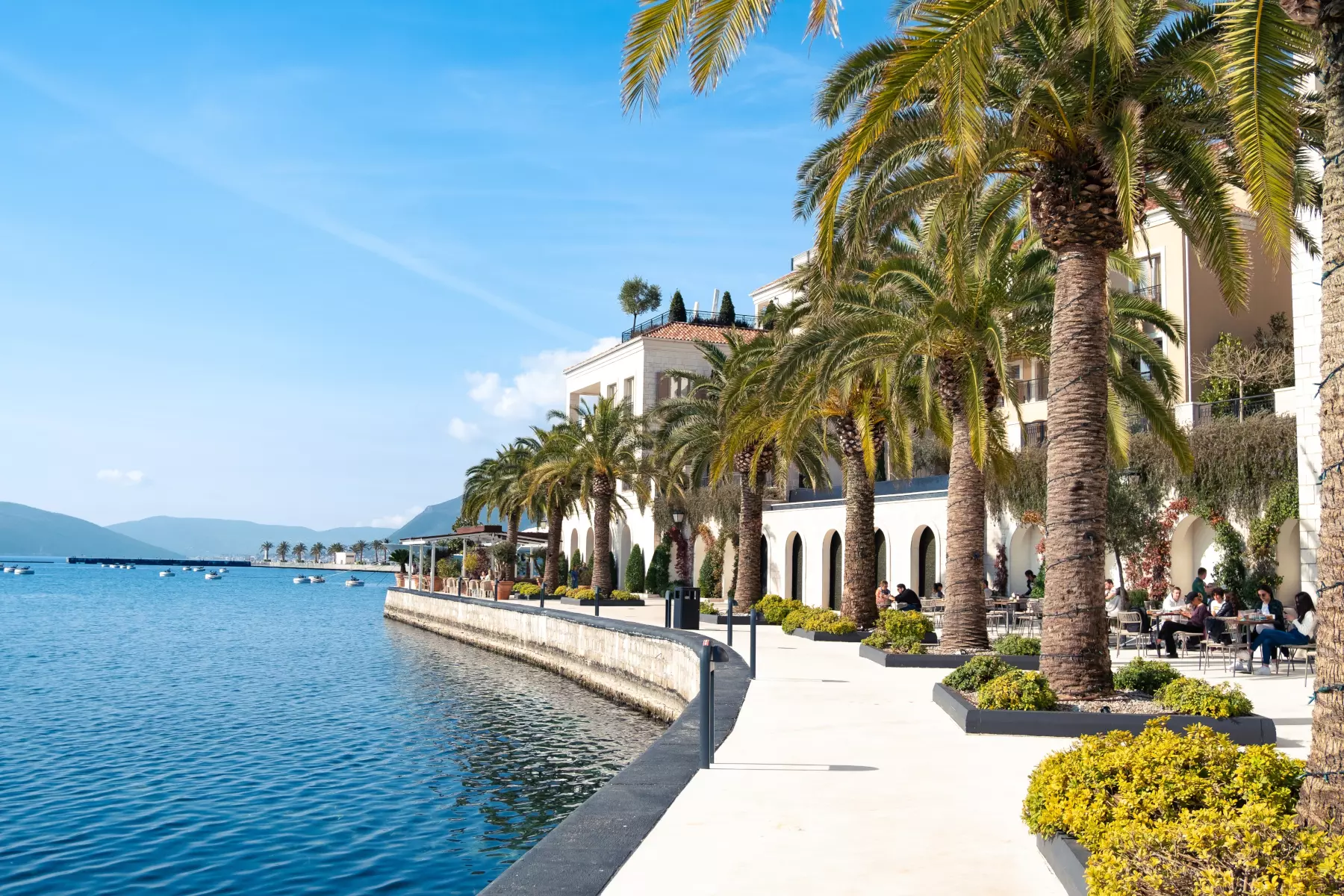
Purchasing property in Montenegro is a straightforward process, and we do everything we can to ensure your purchase runs as smoothly as possible. This guide outlines the main steps, costs, and requirements involved in buying property in Montenegro.
📄 You can also download the PDF edition of this guide to read offline or print.
The Purchase Process
1. Choosing a Property
Once you decide which property you wish to buy, we will help negotiate a price acceptable to both you and the seller.
2. Appointing a Lawyer
We strongly recommend appointing an independent lawyer licensed in Montenegro to represent you throughout the purchase process. Your lawyer will review the title deeds and legal status of the property, advise you of any legal issues, draft and negotiate the Purchase Contract, organise its notarisation, register you as the new owner and assist with the payment of the purchase tax.
We are happy to provide a list of recommended lawyers.
3. Reservation Agreement and Deposit
Once the main terms are agreed, a Reservation Agreement is usually signed and a deposit paid to reserve the property and remove it from the market.
The deposit is usually held by the agency and protects both parties. Should either party withdraw without a valid contractual reason, the deposit may be forfeited in accordance with the Reservation Agreement.
4. Contract Preparation
The Purchase Contract is prepared by the notary and negotiated between the buyer and seller, usually through their lawyers.
5. Signing the Contract
The Purchase Contract must be signed before a Montenegrin notary.
The contract may be signed:
- In person by the buyer, or
- By the buyer's lawyer acting under a valid Power of Attorney.
The purchase price is paid through the notary's escrow account according to the payment schedule specified in the Purchase Contract.
6. Registration of Ownership
Once the seller receives the full purchase price, the notary submits the Purchase Contract to the Land Registry for registration of the new ownership.
After registration is completed, you will receive the updated Land Registry Deed (List Nepokretnosti) showing you as the registered owner.
Important Note: Under the Family Law legislation of Montenegro, property acquired during a marriage is generally considered the joint property of both spouses, regardless of which spouse is registered as the owner in the Land Registry. Exceptions may apply where ownership is regulated by a prenuptial or marital agreement, or where the property constitutes separate property acquired through inheritance, gift, or another basis recognised by law.
This may be particularly relevant when the property is sold in the future, as the consent of both spouses may be required even if only one spouse is registered as the owner.
Power of Attorney (POA)
The Purchase Contract must be signed before a Montenegrin notary. If you are unable to attend in person, your lawyer may sign on your behalf using a Power of Attorney.
If possible, it is easiest to arrange the Power of Attorney while you are still in Montenegro.
If you are abroad, your lawyer will prepare the POA text, which must be:
- Notarised in your home country
- Apostilled (in most cases)
- Sent to Montenegro by courier (DHL, FedEx, etc.)
Please check with your lawyer regarding the exact requirements applicable to your country.
What is an Apostille?
An Apostille is an international certificate that confirms the authenticity of a public document, allowing it to be recognized in another country.
You must apply for an Apostille in the country where the document was issued. It is usually issued by a court, Ministry of Justice, Ministry of Foreign Affairs, or another authority designated under local regulations.
Purchase Costs
Apart from the agreed purchase price, the main purchase costs are:
Legal Fees
For full legal representation, including title checks, contract preparation, registration of ownership and tax assistance, lawyer's fees generally start from €1,500, depending on the complexity and value of the transaction.
Notary Fees
Notary fees depend on the value of the Purchase Contract.
For example:
- Purchase price: €200,000
- Notary fee: approximately €720
- Escrow account fee: approximately €700
- Total notary costs: approximately €1,420
We can provide the official notary tariff upon request.
Interpreter Fees
If one of the parties is a non-resident who does not speak Montenegrin, a court-certified interpreter must be present at the signing.
Typical costs are:
- Written translation of the Contract: approximately €20 per page
- Oral interpretation at the signing: €50 per hour
The total translation cost is usually around €120–€200, depending on the length of the documents.
Other Administrative Costs
Various smaller administrative fees may apply, usually not exceeding €100 in total.
Montenegro Prospects does not charge any fee to the buyer.
Property Transfer Tax
Property transfer tax is assessed by the Tax Authority, but it is usually based on the value stated in the Purchase Contract.
Current tax rates are:
- Up to €150,000: 3% of the property value
- €150,001 – €500,000: €4,500 + 5% of the amount above €150,000
- Over €500,000: €22,000 + 6% of the amount above €500,000
Example
For a property valued at €250,000:
€4,500 + 5% × (€250,000 − €150,000)
= €4,500 + €5,000
= €9,500
Please note that some new-build and off-plan developments may be exempt from transfer tax because VAT is already included in the purchase price. Your lawyer will advise whether this applies to your purchase.
Annual Property Taxes
Once you become the registered owner, you will be liable for annual property taxes.
The amount depends on the size, location, and characteristics of the property.
Property owners may also be required to pay a Holiday Home (Tourist) Tax where applicable.
Tax bills are generally issued annually and can be paid through local tax offices or banks.
Notarisation and Contract Signing
Montenegrin law requires all property purchase contracts to be notarised.
If you are attending the signing in person, a court-certified interpreter must be present to read and explain the contract in a language you understand.
If you are purchasing via Power of Attorney, the translated contract will be sent to you for approval before your lawyer signs on your behalf.
Registration of Ownership
Once the Purchase Contract has been notarised and submitted, the Land Registry (Cadastre) will process the registration of the new ownership.
The statutory processing period is generally up to 60 days; however, in practice, registration may take longer depending on the municipality, workload, and time of year. Delays are particularly common during the summer season and holiday periods.
Your lawyer will monitor and manage this process on your behalf.
Restrictions on Foreign Buyers
There are generally no restrictions on foreign citizens purchasing residential property in Montenegro.
However, foreign individuals cannot directly purchase certain categories of agricultural land. In such cases, ownership can usually be acquired through a Montenegrin company.
Residency in Montenegro
Foreign citizens who purchase a residential property in Montenegro with a value of €150,000 or more may be eligible to apply for temporary residence, subject to meeting the requirements prescribed by the Ministry of Interior.
This minimum property value requirement does not apply to citizens of the European Union.
Temporary residence is generally granted for one year and can be renewed annually, provided the relevant conditions continue to be met.
As legislation and administrative requirements may change, we recommend consulting your lawyer or contacting us for the latest information regarding residency eligibility and application procedures.
Bank Requirements – Proof of Source of Funds
Montenegrin banks and notaries are required to verify the origin of funds used for property purchases.
The buyer will usually be asked to provide:
- An official bank statement from the account from which the purchase funds will be transferred, covering the last six months (or from account opening if the account is newer).
- Documentation proving the source of the funds deposited into that account, such as salary records, sale agreements, inheritance documents, dividend payments, business income records, or similar evidence.
- Any additional documents, declarations, or explanations requested by the bank or notary.
As part of standard banking and compliance procedures, the bank and the notary may require sufficient documentation regarding the source of funds before authorising the release of funds from the escrow account.
Please note that, in most cases, the purchase funds must be transferred from a bank account held in the buyer's own name. Transfers from third parties, family members or friends may require additional documentation and approval from the bank and notary and can cause delays in the transaction.
Bank Transfer Charges
Montenegro is part of the SEPA payment system, which significantly reduces transfer costs for payments originating from participating countries.
For transfers from non-SEPA countries, bank charges can be considerably higher. Buyers should take these costs into account when planning the transfer of purchase funds.
Disclaimer
The information contained in this guide is intended as a general overview of the property purchase process in Montenegro. While every effort has been made to ensure accuracy, legislation, tax regulations, banking requirements, and administrative procedures may change over time.
We strongly recommend obtaining independent legal and tax advice before proceeding with any property purchase.
For further information, please contact:
Montenegro Prospects
info at montenegroprospects.com (info[at]montenegroprospects[dot]com)
www.montenegroprospects.com